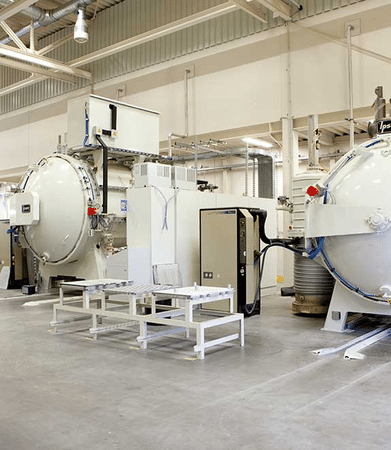
In the realm of modern engineering and manufacturing, diffusion bonding stands as a powerful technique that has revolutionized the way we join materials. If you’ve been searching for insights into this remarkable process, you’ve come to the right place. In this article, we will delve deep into the world of diffusion bonding, shedding light on its key aspects, advantages, and applications.
What Is diffusion bonding?
diffusion bonding, often referred to as diffusion welding, is a solid-state welding process that joins materials together without melting them. Unlike traditional fusion welding methods, such as arc welding or spot welding, diffusion bonding relies on atomic diffusion to create strong, durable bonds between materials.
This process involves heating the materials to an elevated temperature, typically below their melting points, and applying pressure. During this controlled environment, atoms at the material interfaces migrate, forming metallurgical bonds. The result is a joint that possesses exceptional strength and integrity, often surpassing the mechanical properties of the base materials.
The Advantages of diffusion bonding
1. Metallurgical Integrity: diffusion bonding creates bonds with no fusion zone, resulting in joints that retain the original material properties. This is particularly advantageous for applications where material integrity is crucial.
2. High Temperature Resistance: Diffusion-bonded joints can withstand high temperatures, making them suitable for use in extreme environments.
3. Versatile Material Compatibility: One of the remarkable aspects of diffusion bonding is its ability to join dissimilar materials, including metals, ceramics, and even composites. This versatility opens the door to a wide range of engineering applications.
4. Minimal Distortion: Since diffusion bonding doesn’t involve melting, there is minimal distortion or warping of the materials, preserving their dimensional accuracy.
5. Complex Geometries: This technique can be applied to create joints in intricate and complex geometries, making it valuable in various industries, from aerospace to electronics.
Applications of diffusion bonding
diffusion bonding finds applications across a spectrum of industries:
Aerospace: In the aerospace sector, diffusion bonding is used to manufacture components with superior strength and durability, ensuring the safety of aircraft and spacecraft.
Electronics: Electronics benefit from diffusion bonding in the assembly of heat sinks and microelectromechanical systems (MEMS).
Medical Devices: The medical industry employs diffusion bonding in the production of biocompatible implants and surgical instruments.
Energy Sector: Diffusion-bonded heat exchangers and superalloy components play a crucial role in the energy sector, enhancing efficiency and reliability.
Conclusion
In the world of material joining techniques, diffusion bonding stands out as a powerful and versatile method with a multitude of advantages. Its ability to create robust joints in dissimilar materials and its applicability across various industries make it a game-changer in modern engineering.
If you’re considering diffusion bonding for your next project, look no further than hdbrazing.com. As a leader in the field of diffusion bonding, they offer cutting-edge solutions and expertise to meet your specific requirements. With their assistance, you can harness the full potential of diffusion bonding technology for your applications. So, why wait? Explore the world of diffusion bonding and unlock new possibilities in material joining today!